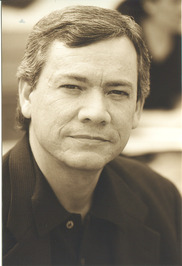
1 Published BooksRichard M. Pico
Richard was born and raised in Indiana with a natural passion for basketball, which he played competitively in high school and recreationally until the age of 40, when he tore his Achilles tendon. Growing up near the Indy 500 racetrack, Richard also developed an early appreciation for cars and engineering... and for driving fast. His affinity and avid appetite for science and science fiction also had firm roots in his childhood.
After graduating from high school, Richard joined the Air Force, got married, and moved to California to start a family. He worked on rocket systems while stationed at Vandenberg Air Force Base and Johnston Island, but his primary focus was on the educational opportunities offered by the Air Force. While in California, he completed a bachelor’s degree and master’s degree in Experimental Psychology, followed by a PhD in Neuroscience, studying learning and memory, and finally a medical degree specializing in Psychiatry and clinical research. He concluded his military career with the rank of Major at Lackland Air Force Base in San Antonio, Texas, where he was developing novel metrics for diagnosing schizophrenia using 3D brain imaging.
Richard then moved to NYC, where he accepted a position as director of Inpatient Psychiatric Medicine at Mount Sinai Medical Center. It was in New York that his theory of human brain function took form, synthesizing his early thoughts on Einstein’s relativity theory, his training in Psychology and Neuroscience, and his insights from working with patients, ultimately leading to the publication of Consciousness in Four Dimensions: Biological Relativity and the Origins of Thought. While in New York, he also took on a new challenge, working for the first time outside the academic and clinical setting as vice president of Research and Development and Chief Medical Officer for the technology subsidiary of Empire BlueCross BlueShield. On September 11, 2001, in his office on the 19th floor of the north tower of the World Trade Center, Richard felt the explosive collision of Flight 11. Many thought it was an earthquake, but having lived in California, Richard knew it was something else. He evacuated his team from the building and persuaded many from other floors and the immediate area to evacuate. He was clear and out of sight of the towers by the time they collapsed.
Less than a year later, Richard was hired on as Chief Medical and Technology Officer for Perot Systems Healthcare group in Dallas, Texas. This was a custom-made position that utilized his strengths in research and development, his clinical experience and his vision for technology solutions in healthcare. Richard launched Péradigm, a suite of applications that facilitate communication between healthcare providers, insurers and resources, ultimately aimed at lowering costs to patients. The job required a lot of travel, both global and domestic. Serendipitously, this is how he met his next wife, who had worked for 20 years in the airline industry. In October of 2005, they married and moved to Vancouver, Canada.
Richard transitioned back to the clinical setting, taking a position as Head of the Department of Psychiatry with Providence Heath Care at St. Paul’s Hospital. He simultaneously held a Senior Advisory title for Clinical IT at the Provincial Health Services Authority and a Clinical Professor faculty position at UBC.
He was in the midst of outlining two new volumes in what was intended to be a multifaceted series on Biological Relativity, in addition to his ongoing career opportunities, when he was diagnosed stage 4 colon cancer in July 2010. He passed one-year later on July 26th 2011.
