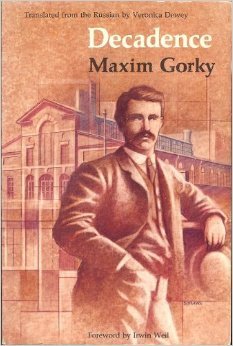
Decadence
Georg Lukács called Maxim Gorky "the greatest writer of our time." Delo Artamonovykh, published in 1925 & translated into English in 1927 as...
Also Available in:
- Amazon
- Audible
- Barnes & Noble
- AbeBooks
- Kobo
More Details
Georg Lukács called Maxim Gorky "the greatest writer of our time." Delo Artamonovykh, published in 1925 & translated into English in 1927 as Decadence, is his greatest historical novel. Until now, it has not been widely available to Western readers. Decadence is a family saga, an intricate character study, & a picture of Russia in the years between the serf’s emancipation & the Bolshevik Revolution. It chronicles the fortunes of three generations of merchants who, in themselves, represent the tensions of the changing social order. In 1863, Ilya Artamonov founds a linen factory by the Oka River. In time the factory prospers & his children, inspired by his passion for labor, make improvements. A grandnephew even adds a library & organizes a football team. But one grandson is lazy. Another is a socialist. Already on the scene & biding his time is Tikhon, the new proletarian. The decline, or "decadence," of the Artamonov family, & by extension the Russian middle class, is a result of personality clashes & of social revolution in the wind. Neither a lament for the old order nor a cheer for revolution, Decadence depicts the beginnings of a bourgeois class that gave way to two wars & two revolutions. It describes Russia's capitalist episode, when the development of factory labor & the accumulation of wealth transformed a feudal societ into a nation of workers. "Everyone lives for work, but whether men live for anything beyond their work, we can't see."
This edition of Decadence includes a foreword by Irwin Weil, professor of Slavic languages at Northwestern University.
- Format:
- Pages: pages
- Publication:
- Publisher:
- Edition:
- Language:
- ISBN10:0803270127
- ISBN13:9780803270121
- kindle Asin:0803270127
About Author