8 Published BooksW.D.M. Bell
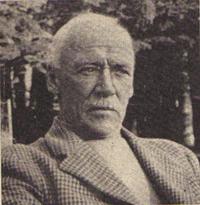
Walter Dalrymple Maitland Bell known as Karamojo Bell, was a Scottish adventurer, big game hunter in East Africa, soldier, decorated fighter pilot, sailor, writer, and painter.
Famous for being one of the most successful ivory hunters of his time, Bell was an advocate of the importance of shooting accuracy and shot placement with smaller calibre rifles, over the use of heavy large-bore rifles for big African game. He improved his shooting skills by careful dissection and study of the anatomy of the skulls of the elephants he shot. He even perfected the clean shooting of elephants from the extremely difficult position of being diagonally behind the target; this shot became known as the Bell Shot.
Although chiefly known for his exploits in Africa, Bell also traveled to North America and New Zealand, sailed windjammers, and saw service in South Africa during the Boer War, and flew in the Royal Flying Corps in East Africa, Greece and France during World War I.
After a period of time recuperating from illnesses contracted during the war, he returned to elephant hunting, shooting in Liberia and the Ivory Coast and traveling by canoe, making a trip of 3000 miles in 1921. On this expedition he was joined by his comrade from the Royal Flying Corps, R. M. Wynne-Eayten. His last safari was an automobile expedition through the Sudan and Chad with Americans Gerrit and Malcolm Forbes, of which he remarked that 'little hunting was done'. Rather the aim was to travel as far and as fast as possible with the vehicles. After this expedition Bell did not return to Africa. Although he intended to travel by air to Uganda for a last elephant hunt in 1939, his plans were interrupted by the start of World War Two.
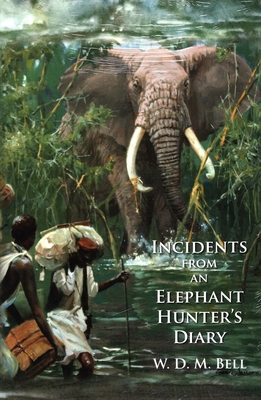
Bell retired to his 1,000 acre highland estate at Garve in Ross-shire, Scotland, named "Corriemoillie", with his wife Katie (daughter of Sir Ernest and Lady Soares) to whom he had become engaged during World War I.He wrote three books about his exploits in Africa, illustrated with his own sketches and paintings, and several articles about aspects of shooting and firearms, published in Country Life' magazine in Britain and 'American Rifleman' in the USA.
Bell and his wife Katie spent their later years sailing competitively. They commissioned the first steel hulled racing yacht Trenchmere (37 tons) in Scotland in 1934 and sailed her in transatlantic ocean racing until the outbreak of World War Two. He also stalked red stags in the Scottish hills with a Winchester Model 54 chambered in the .220 Swift cartridge, of which he wrote articles describing its superior effect on deer due to its high velocity.
After suffering from a heart attack in 1947 which limited his activities, Bell spent his last years on his estate. Only a few days after posting the manuscript for his last book, Walter Bell died of heart failure on the 30th of June 1954