3 Published BooksJohn Harrigan
John grew up in Toledo, Ohio, the son of Jack, a janitor in the Toledo public schools and Mary, a home maker who worked a stint during WWII as a technician in the Willy’s Overland Jeep factory. John was the middle of five children. He graduated from Central Catholic High School. His earliest jobs were gas station attendant, bus boy, factory worker, installer for the telephone company, and postal service letter carrier. He attended college, thanks to the GI Bill which he received after two years in the U. S. Army, graduated from Loyola University of Chicago, and earned a Masters Degree in International Relations from the University of Chicago.
He passed the Foreign Service exam and became a Foreign Service Officer for the U. S. Information Service where he served at the U. S. Embassy in Rio de Janeiro, Brazil. He became enamored with Brazil. Two of his children were born there, he spoke Portuguese fluently, and he made many Brazilian and American friends, some of whom he still remains in contact with today. It is impossible to stress how exciting Rio was for a young person in those days, and if he had had any idea how to support his family there in the local economy, he would gladly have stayed there after his tour of duty was up.
John’s next Foreign Service assignment was to be a regional public affairs officer in Vietnam, and he still retains the almost-surreal letter from the Far East desk officer welcoming him to that assignment. Dated Feb 17, 1966 when Vietnam had been a major war zone for almost a year, the letter waxes eloquently, “Viet Nam is still a remarkably pleasant and approachable country, and will remain so in future years.”
For better or for worse, he sidestepped that opportunity and moved to graduate school at Georgetown University where he earned a Ph.D. in Political Science in 1970. He spent the next thirty years at Hamline University in St. Paul, Minnesota, where he chaired the department for several years, served as Assistant Dean of Liberal Arts for a year, chaired the committee that created Hamline’s graduate program in Public Administration, and wrote several books. For several years, he was very active in Minnesota politics and was elected to the School Board of White Bear Lake, Minnesota. He served three years, during which his major achievement was to discover that he did not have the temperament to be a politician.
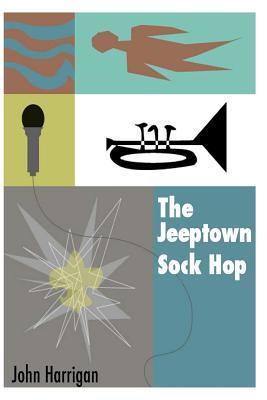
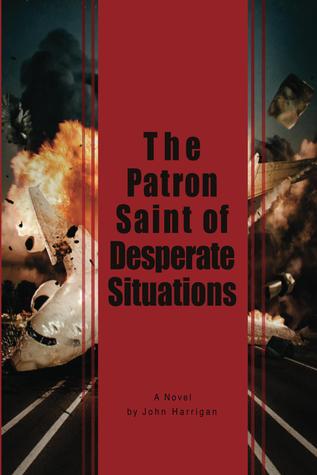
Thanks to royalties from his textbooks and some lucky investments, John was able to retire from teaching in 2000. Since then, he has rekindled an earlier passion for fiction and has published two novels. The Patron Saint of Desperate Situations (2007) is a mystery built around the plane crash that killed Paul Wellstone, and The Jeeptown Sock Hop (2011) is a bittersweet portrait of the 1950s. A third novel is in preparation. On a regular basis he also makes presentations for the Great Decisions program of the Foreign Policy Association, teaches courses for the University of Minnesota’s elder program, and manages his family’s retirement portfolios. If his grandchildren are lucky and the world economy doesn’t collapse, there might be enough in those portfolios to give them each a semester or two of college.
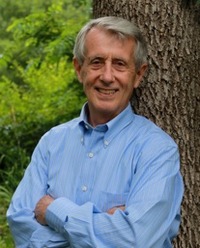
He has three adult sons from a marriage that failed in 1977. He married Sandy Ferguson in 1980 and they had one son. Sandy and John live in Falcon Heights, Minnesota, a first-ring suburb of St. Paul and an ideal location for someone seeking an active retirement. Within a twenty-minute walk are drug stores, supermarkets, hardware stores, a good public library, restaurants, book stores, major bus lines, and an abundance of welcoming coffee shops that have no objection to a grey-haired guy sitting there for hours at a time drafting another chapter for some novel.
John’s wife Sandy spent most of her adult life as a Child Protection Worker in St. Paul. She was a strike captain when the county workers went on strike in the 1990s. In 1995 she got breast cancer and sus